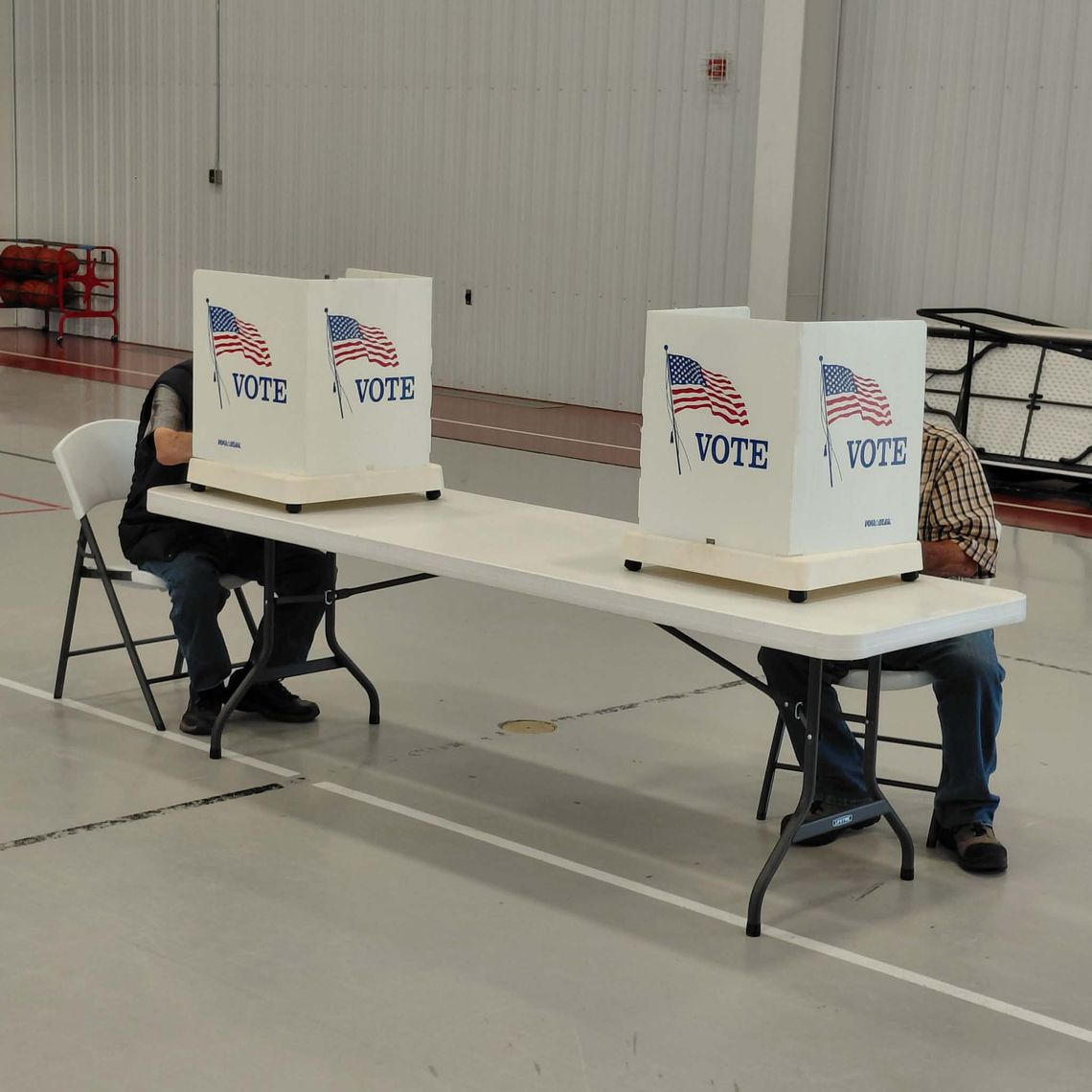
The general election is set for Tuesday, Nov. 3, with early voting already underway. Marshall County voters will have a full ballot this year, including local races, statewide offices and four constitutional amendments.
Three seats on the Marshall County Commission are up for election.
In District 1, Democrat Doug Medhaug is running unopposed and will serve another term. Republican Jason Bender is also unopposed in District 3 and will return to the commission.
District 5 will have a contested race, as incumbent Lynda Luttrell is not seeking another term. Republican Tim Dahme and Democrat Jerry Burger are competing for the seat.
District 5 generally covers the northwest portion of Marshall County, excluding most of Britton. Voters who are unsure of their district can view the county commission district map at marshall.sdcounties.org/county-commissioners/.
The local ballot also includes a race for South Dakota State Representative District 1, where voters may select two candidates. Republican Daniel Kjos, Republican Nick Fosness and Democrat Courtney Enfield are running for the two seats.
District 1 Senator Republican Michael Rohl is running unopposed and will return to Pierre.
Other statewide and federal races on the ballot include:
U.S. Senator: Republican Mike Rounds and Independent Brian L. Bengs. U.S. Representative: Republican Marty Jackley and Democrat Nicole “Nikki” Gronli.
Governor and Lieutenant Governor: Republican Larry Rhoden for governor and Tony Venhuizen for lieutenant governor; Democrat Dan Ahlers for governor and Steven McCleerey for lieutenant governor.
Secretary of State: Republican Heather Baxter, Libertarian Tamara J. Lesnar and Democrat Terrence Davis. Attorney General: Republican Lance Russell. State Auditor: Republican Catherine Barranco and Democrat Tom Cool. State Treasurer: Republican Melissa Hull and Democrat Margaret Kuipers.
Commissioner of School and Public Lands: Republican Brock Greenfield and Democrat Raeann Mettler. Public Utilities Commissioner: Republican Don Haggar and Democrat Frank Kloucek.
Voters will also decide four constitutional amendments referred to the ballot by the South Dakota Legislature.
Constitutional Amendment I: Expanded Medicaid repeal
Amendment I would require South Dakota to repeal its expanded Medicaid coverage if federal funding for the expansion falls below 90%. The measure follows South Dakota voters’ approval of Amendment D in 2022, which expanded Medicaid eligibility to adults over age 18 and under age 65 with incomes at or below 133% of the federal poverty level, plus an additional 5% of the federal poverty level for the applicable family size.
Under Amendment I, those expanded categories would be removed from Medicaid coverage if the federal government provides less than 90% of the funding for South Dakota’s Medicaid expansion. The federal government is currently legally required to provide 90% of the funding.
Constitutional Amendment J: Voter eligibility
Amendment J would clarify in the South Dakota Constitution that only U.S. citizens may vote in state elections.
The amendment would add noncitizens to the list of people constitutionally disqualified from voting. The existing list includes people with felony convictions or who are considered “mentally incompetent.”
Noncitizens are already prohibited by law from voting in South Dakota elections.
Constitutional Amendment K: Unclaimed property fund
Amendment K would create a trust fund for unclaimed property held by the state treasurer.
Currently, intangible property is considered abandoned after it remains unclaimed for three years. This can include travelers checks, money orders, bank deposits, refunds, stocks, funds owed under a life insurance policy and property held in a safe deposit box.
If approved, a portion of the interest and income generated by the trust fund would be transferred to the state’s general fund for the benefit of the state.
Constitutional Amendment L: Require 60% to amend Constitution
Amendment L would raise the threshold required to approve future constitutional amendments from a simple majority to 60% of voters.
Under current law, a proposed constitutional amendment becomes part of the South Dakota Constitution if it receives more than 50% of the vote. If Amendment L passes, future constitutional amendments would need at least 60% voter approval.
Early voting is currently available ahead of Election Day on Tuesday, Nov. 3 at the County Auditor’s Office and through mail-in ballot. For more voter and election information, visit the Secretary of State’s website at sdsos.gov/