
This is Part Two of a two-part series about three local homeschool families from the Britton area.
For the Petersen, O’Brien and Rapkoch families, homeschooling is about much more than completing a certain number of assignments each day.
It is about finding out how each child learns, allowing room for interests and activities, and making education part of everyday family life.
That does not mean the families simply leave academic progress to chance.
The O’Brien family of rural Britton uses standardized testing every year or every other year to make sure the children are progressing and to identify areas that may need more attention. “I want to make sure we’re not missing things,” Mom Ann O’Brien said.
The Petersens of Britton have taken a different approach. Mom Taryn works with her children every day and can see firsthand what they understand and where they need more help.
“I can look at their work and see that they’re getting what they need at the appropriate grade level,” she said.
While standardized tests are available, the Petersens currently feel their time is better spent elsewhere.
Mary Rapkoch uses standardized testing every other year as another tool for evaluating her children’s progress.
She does not consider testing a perfect measurement, but believes it can point out areas to work on. She also sees value in preparing children for a skill they are likely to encounter later in life.
“Standardized testing does not give the perfect metric,” Mary said, “but it does help to point out some things to work on.”
That attention to individual needs also extends beyond academics.
The Petersen boys are involved in youth baseball, basketball and football. Dad Erik said socialization was one of the concerns he initially had about homeschooling, but his children have plenty of opportunities to interact with other kids.
The O’Brien children participate in sports, plays, community service, church activities and volunteering. After COVID, organized sports became more important to the family, particularly after changes in state law made it possible for homeschooled students to participate.
“If we are going to be part of an activity, we make that a priority,” Ann said.
That can mean adjusting school around the activity. If the family is traveling to a track meet, for example, some schoolwork may be completed in the car.
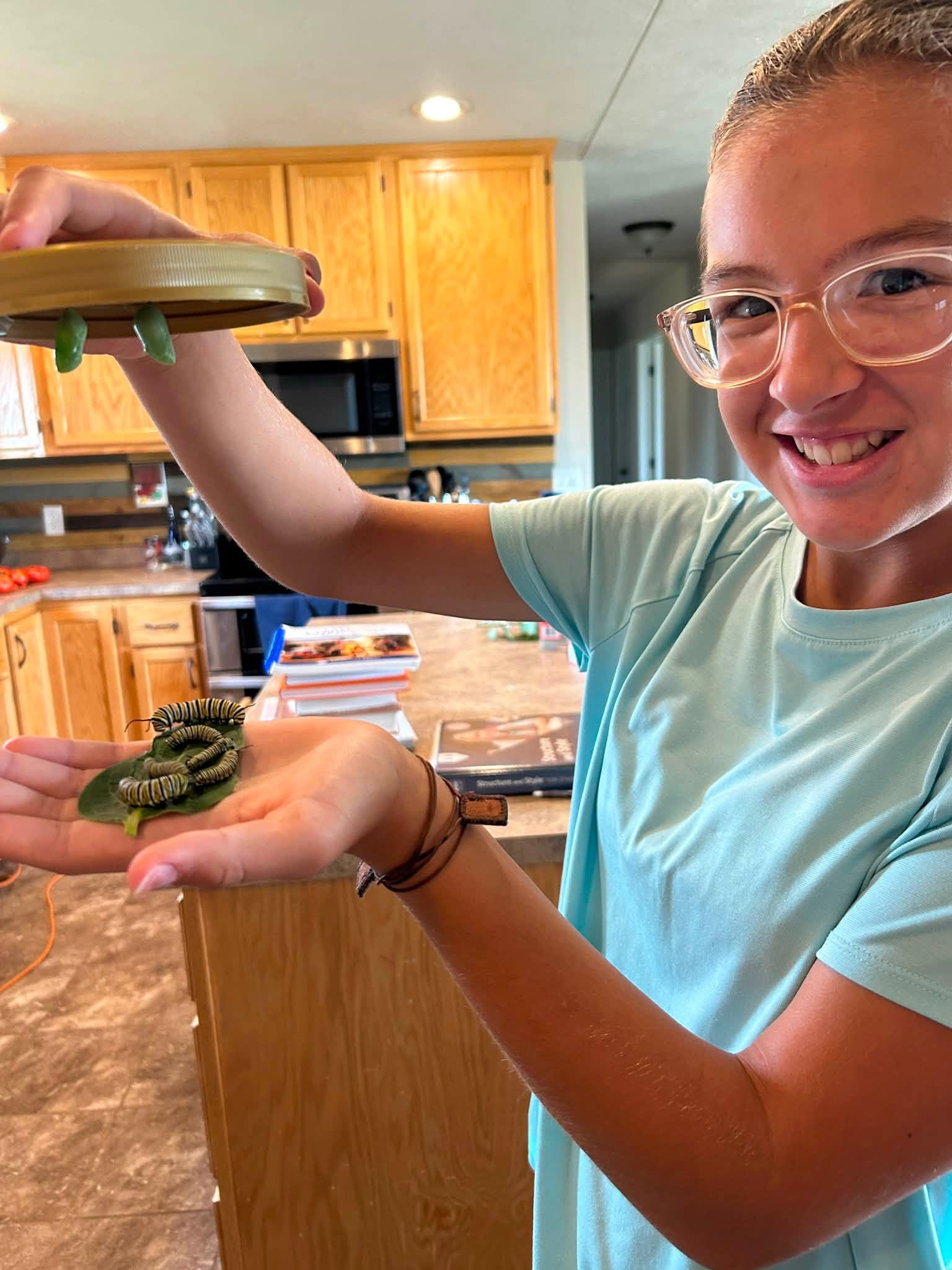
The Rapkoch children are similarly busy. They participate in 4-H shooting sports, baseball and softball, swimming and hunting. They also have plenty of opportunities to pursue their own interests, including a butterfly garden they were eager to show off.
Mary said the family does have to learn when to say no.
“If we consider doing something or are asked to do something, we look at it and evaluate how that commitment would affect the schooling,” she said.
The families also push back against one of the most common perceptions about homeschooling: that homeschooled children are isolated or socially awkward.
The O’Briens are part of a local homeschool group and take part in activities such as trips to the zoo, Sica Hollow and Storybook Land.
“We’re social,” Ann said, noting that her children also have opportunities to interact through sports, church and other activities.
The Petersens say their children enjoy being part of teams and meeting other kids.
For the Rapkochs, being homeschooled does not mean staying home all day. The family is active in the community and has found that homeschooling provides opportunities to expose their children to a wide range of experiences.
The families acknowledge that homeschooling has challenges, particularly when several children need attention at the same time.
Ann described it as sometimes feeling like a “one-room schoolhouse.” Keeping everyone focused can be difficult, especially during the busy seasons of planting and harvest for their family.
Mary said one of the biggest challenges is helping others understand that homeschooling is a significant commitment.
“We take this seriously,” she said. “We are busy. We dedicate a lot of time for school.”
For the Petersens, the challenge is finding a balance between running a household, keeping children challenged and managing the different seasons of family life.
But all three families say the flexibility of homeschooling has become one of its greatest benefits.
The O’Briens can set aside the schedule when family circumstances require it. The Petersens can travel during less busy times and turn trips into learning experiences. “We are travelers,” Taryn Petersen said. “We want to show them how to travel, how to act, travel during non-peak times, get to do it, provide them with great experiences.”
The Rapkochs recently made an exception to their routine to take the family to a Twins game. And with their efficient schedule, they often finish the school year by late April or May, giving them additional flexibility.
The families also see everyday tasks as part of their children’s education. Cooking, cleaning, shopping, budgeting and other life skills become lessons in their own right.
For the Rapkochs, the goal is to provide a faith-based education while raising their children in a small-town environment and exposing them to art, beauty and experiences beyond their community.
The Petersen family describes its goal as raising lifelong learners who have a love of education.
And while the families currently see homeschooling as the best choice for their children, none considers the decision set in stone.
The Petersens plan to make future decisions based on what is best for each child. The O’Briens continue to reevaluate their choice each year, while also seeing that homeschooling can accommodate increasingly advanced classes. The Rapkochs hope to eventually incorporate college classes as their children get older and prepare them for higher education.
For all three families, homeschooling is not about making a statement or suggesting that one form of education is right for everyone.
“It’s what works for our family,” Erik Petersen said.
Mary agrees that homeschooling is not necessarily for every family, but believes people should not be afraid to ask questions.
“If you have questions, if you want to know about homeschooling, never hesitate to ask,” she said. “It’s not upsetting to me if people ask what we do and how we do it.”
There are plenty of resources available, the families said, and connecting with other homeschooling parents can be especially helpful.
Ultimately, each family has found its own version of what homeschooling looks like, adjusting schedules, curriculum and activities to fit the children in front of them.
As Mary put it, the goal is not simply to teach a collection of subjects, but to teach the whole person. And as this school year gets into full swing, it seems that all three families are accomplishing that well.