
This is part one in two-part series about local homeschooling families.
For some local families, ‘back to school’ looks a little different
When students at Britton-Hecla and Langford Area schools headed back to the classroom this fall, they were not the only local children getting back into a school routine.
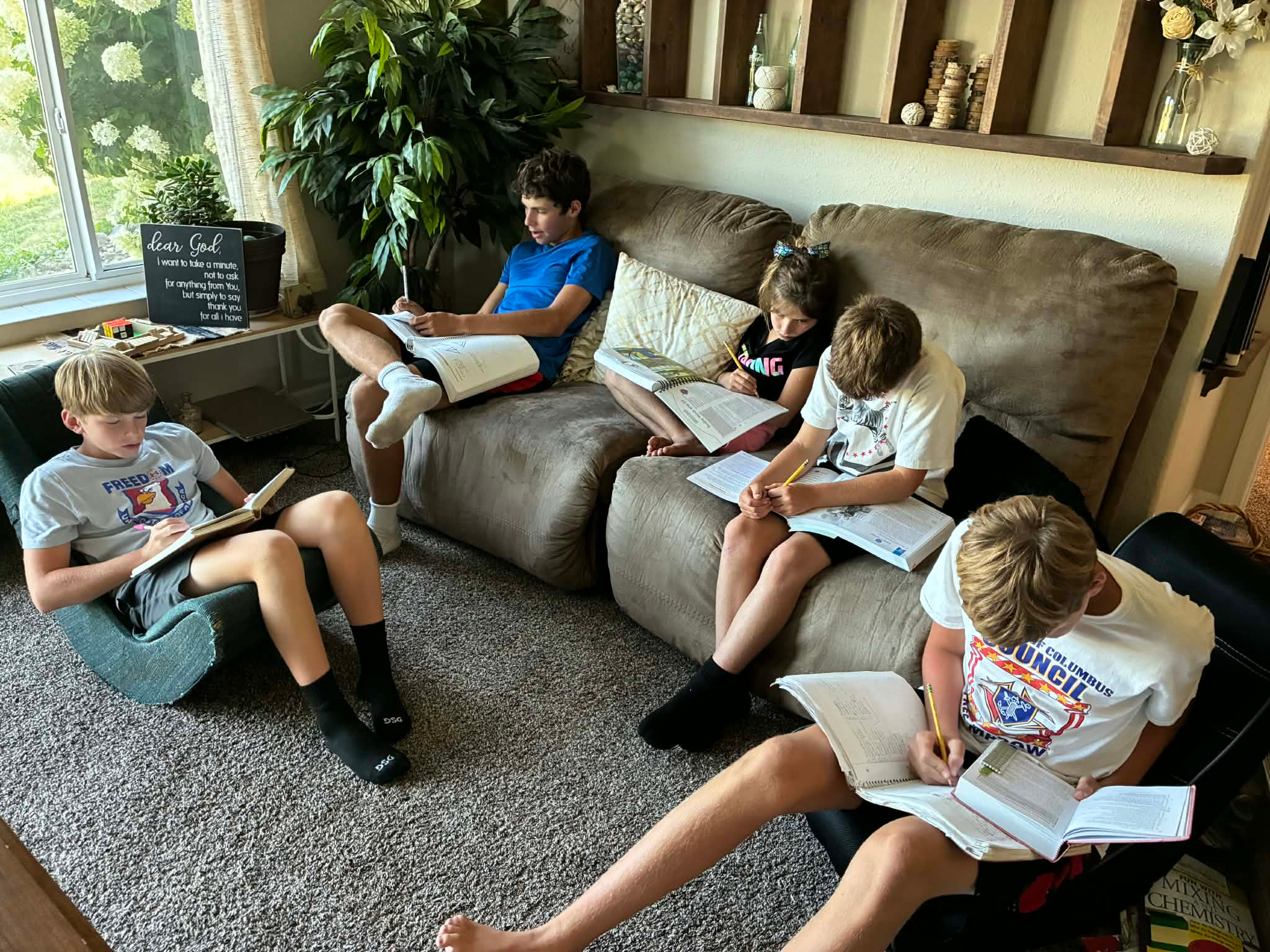
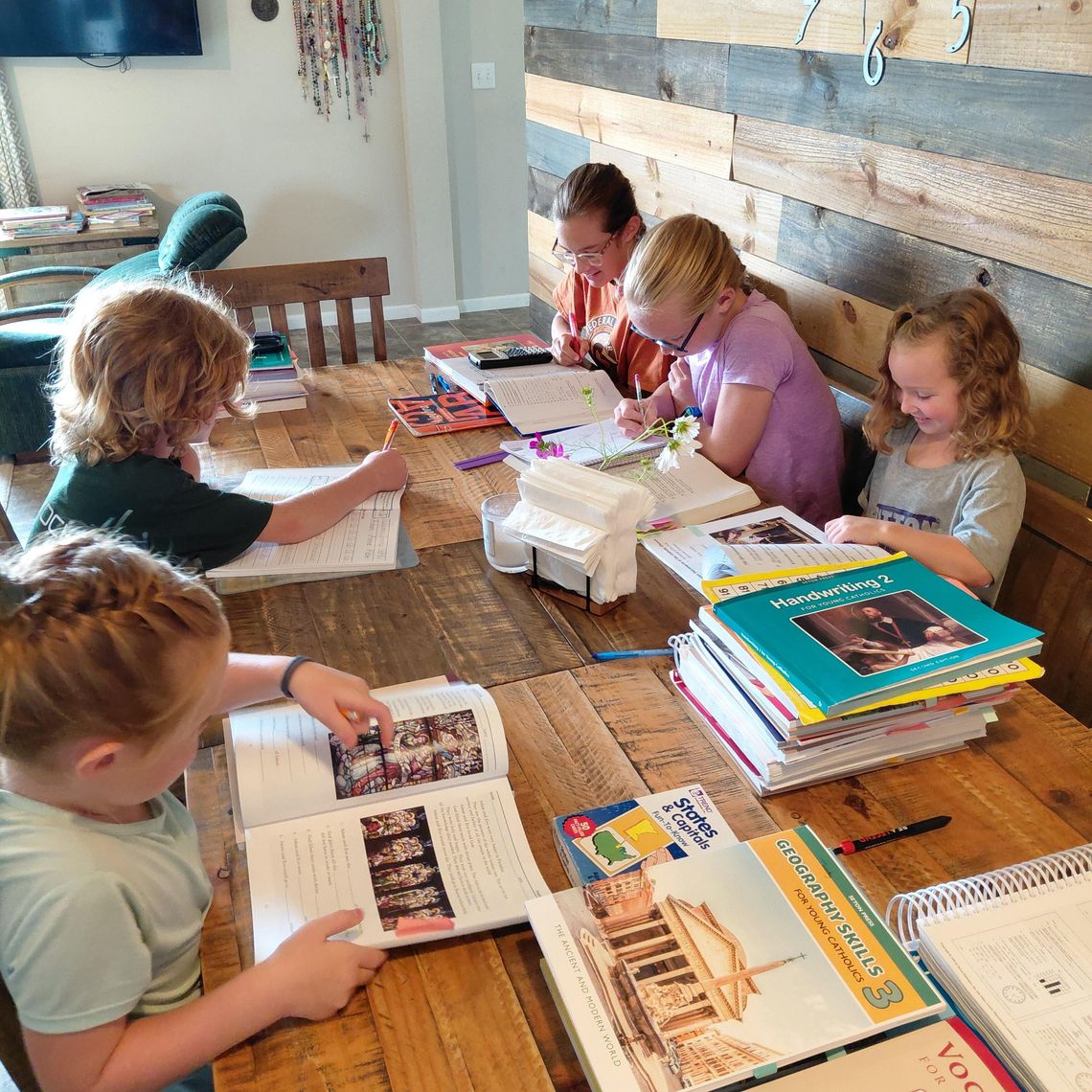
For three Britton-area families, “back to school” means opening textbooks at the kitchen table, logging into an online lesson, working one-on-one with Mom or heading outside for a break before getting back to schoolwork.
Homeschooling looks different for every family, and that is part of the appeal for Erik and Taryn Petersen, Ann and Nate O’Brien, and Mary and Victor Rapkoch. Each family has found its own way to make homeschooling work, based on the needs, interests and personalities of their children.
South Dakota gives homeschooling families considerable flexibility. Parents do not have to hold teaching credentials, there is no required number of instructional days or hours, and standardized testing is not required. Families are required to provide instruction in at least language arts and mathematics.
For the Petersens, homeschooling was a decision rooted in wanting to spend more time with their children and provide an education tailored to them.
Taryn Petersen had been homeschooled herself until high school, so she was familiar with the idea. When the family moved to Britton, she and Erik wanted to spend more time with their children.
Their oldest son, Max, now a third grader, was also a factor. He was an eager student who had shown an interest in learning from a young age. “We wanted to meet him where he was at academically,” Taryn said.
The Petersens also approach education as more than academics. They want to consider the “whole person,” focusing on what they describe as “body, mind and spirit.” Erik was initially more skeptical about homeschooling. Taryn was more familiar with it and more inclined to give it a try.
“Now I couldn’t imagine doing it any other way,” Erik said.
Their school days are flexible, and that flexibility is one of the things the Petersens appreciate most.
When it comes to curriculum, the Petersens use a variety of publishers and programs rather than relying on one curriculum for every child. Taryn said one of the benefits of homeschooling is being able to find what works best for each student. “Not everyone learns the same way,” she said.
Max, for example, does well with different types of curriculum and does not need as much lecturing or repetition. If he understands a concept, the family can move on rather than waiting for the rest of a classroom to catch up. Other subjects may require more time and attention.
Their kindergarten son, Blaise, might begin the morning with literature, science, religion and art. Max works independently at times and works one-on-one with Taryn in the afternoon. If the boys become restless, they can go outside and run around before returning to their lessons.
“I know that little boys don’t sit well for long stretches and need to be running around and playing,” Taryn said. The family has been surprised by how efficiently schoolwork can be completed at home.
The O’Brien family has approached homeschooling in their own way.
Ann and her husband, Nate, live near the South Dakota-North Dakota border with their five children: Joseph, 15; Benny, 13; Hezekiah, 11; Isaac, 10; and Elizabeth, 7.
Both parents attended public school, and Joseph initially attended kindergarten at Britton-Hecla. But the family eventually felt they were being called by God to homeschool.
“It was a tough decision,” Ann said. “I thought he might be back in school the next week.”
Instead, homeschooling quickly proved to be a good fit. Joseph was able to move efficiently through his work, and the family has continued to reevaluate the decision each year.
Their school day begins at about 8 a.m. The younger children generally complete about three hours of work, while the older two may work until 2 p.m. Some lessons are taught online, while others involve books and direct instruction from Ann or Nate.
The O’Briens have also learned that finding the right curriculum can be a process. Early in their homeschooling experience, Ann attended a homeschool meeting in Fargo and conventions where she could learn about different learning styles and the many curriculum options available.
“We switched curriculum for the different students,” she said, noting that the flexibility allows them to find an approach that works for each child.
The children also help one another. “They don’t all learn the same way,” Ann said. “Some easily understand a concept and some don’t.”
That means Ann can adjust the pace and approach for each child. The older children can also help the younger ones, giving them another opportunity to reinforce what they have learned.
The Rapkoch family takes a similarly individualized approach, although with an even larger household.
Mary and Victor Rapkoch have eight children, with Rosalyn, 12; Faustina, 11; Becket, 9; Zelie, 7; and Siena, 5, among those currently at school age.
Mary was homeschooled from kindergarten through 12th grade, while Victor attended public school. By the time they started their own family, homeschooling was a clear choice.
“It was nonnegotiable for me to homeschool,” Mary said. “Victor, too, has become very passionate about it as we have done it.”
The family had already decided to homeschool before moving to the Britton area, so the quality of the local schools was not a deciding factor. Rather, Mary said the goal was always to provide a curriculum that was “Catholic-saturated.”
The family began with a Catholic curriculum company when their oldest daughter was in preschool and has built their approach from there. Mary said she is comfortable substituting different materials when she feels another resource would work better for a particular child.
Their mornings begin with prayer before the children split off to work at different levels. The older children are increasingly independent, using online resources and working through subjects such as science, writing, Latin, math and English.
The younger children require more one-on-one attention. Mary may find herself sitting between two children, helping one while working with another. “You just have to roll with the punches,” she said.
For all three families, that flexibility is a major part of what makes homeschooling work. Instead of trying to make every child fit the same schedule or learning style, the parents can adjust the education to the child.
And for these families, school is not necessarily confined to a desk or a particular set of hours. A lesson can happen at home, in the car, outside or while traveling.
As the school year gets underway, the three families are continuing a routine that works for them, while remaining willing to adapt as their children grow.
Part Two will look at how the families measure academic progress, balance homeschooling with activities and sports, address socialization and misconceptions, and look toward the future.