Like many farmers across northeast South Dakota this spring, Tom Olson of rural Langford was recently putting in corn. But Olson’s fieldwork looked a little different than most.
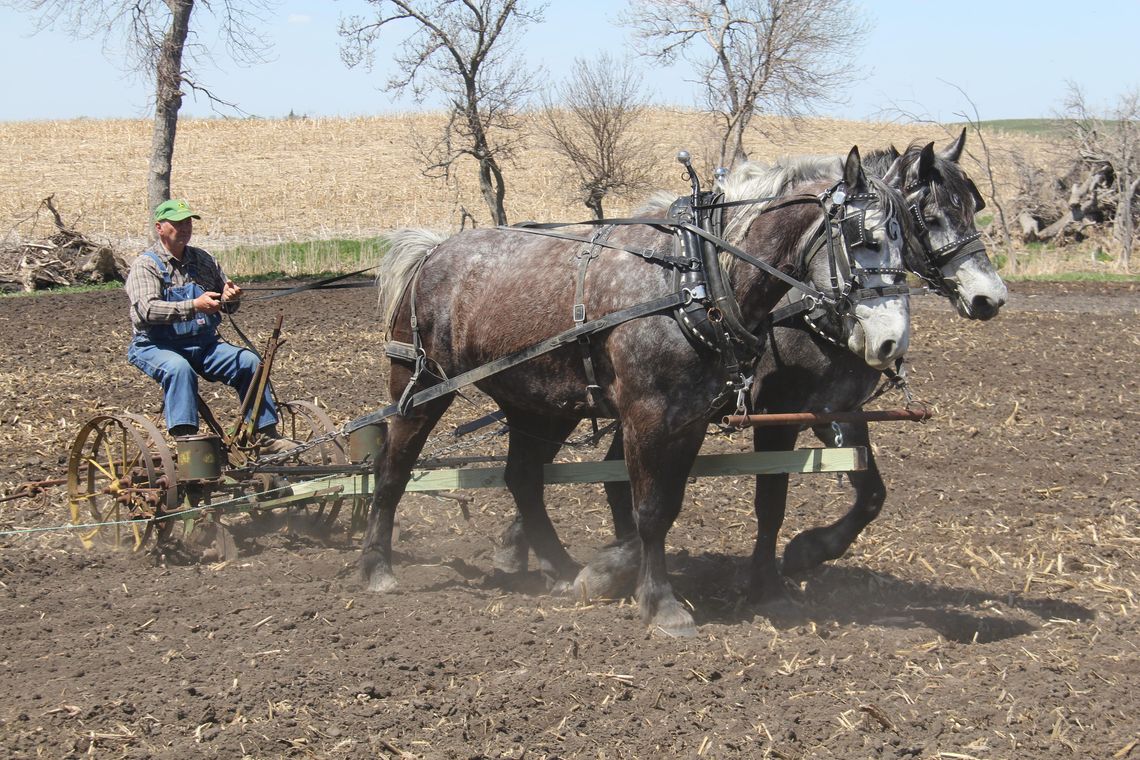
Instead of sitting inside the cab of a modern tractor guided by GPS, Olson sat behind a team of Percheron horses, reins in hand, planting corn with a John Deere 999 planter that dates back more than 100 years.
Olson was literally using horsepower.
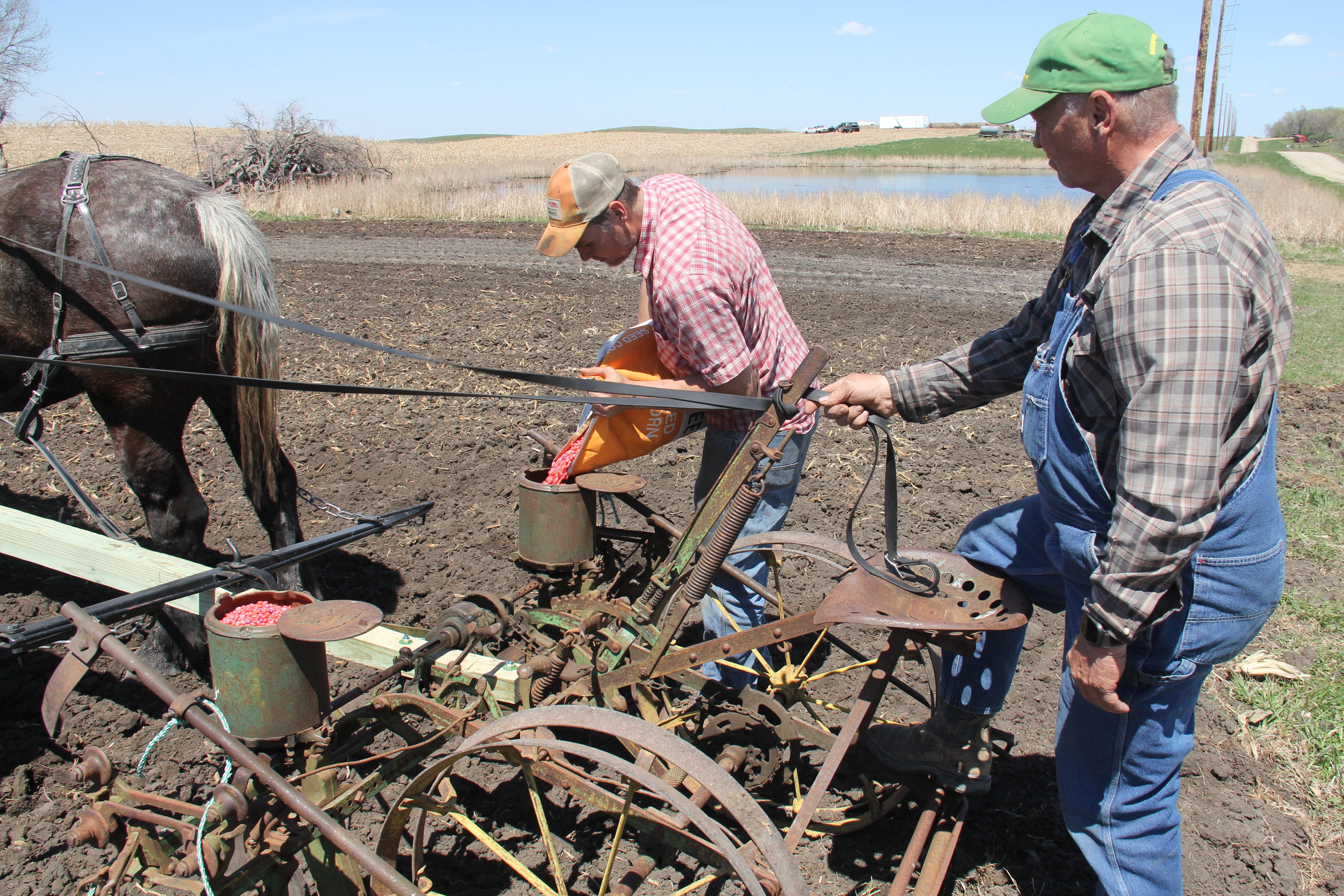
The antique planter, built in the early 1900s, plants two 42-inch rows at a time, a far cry from today’s equipment capable of planting more than 40 rows in a single pass. Seed is poured into round metal canisters, and with the steady pull of the horses and Olson keeping a careful eye on the rows ahead, the old machine still does exactly what it was built to do generations ago.
While Olson owns modern farm equipment, semi-retirement gave him the opportunity to slow down and try something different.
“I’d always wondered what it would be like,” Olson noted.
The curiosity was rooted in family history. Olson remembers his father, Bernard, using a similar planter years ago. When Tom spotted the John Deere 999 at an auction in Webster a little over a year ago, the memories came rushing in.
“My dad Bernard had used a similar planter, and I wondered what it would be like to plant with it,” he said.
He bought the planter and discovered it was still in remarkably good shape, having spent most of its life indoors. Aside from constructing a replacement piece or two, the machine was ready to head back to the field.
Olson planted with the antique equipment last year and enjoyed the experience enough to do it again this spring. This year he planted acres of both sweet corn and field corn, estimating he could plant about an acre per hour.
He also seeded around seven acres of oats using his horse team and an antique Van Brunt grain drill that is even older than the corn planter.
His son, Josh Olson, wasn’t surprised to see his father embracing the old-fashioned way of farming.
“I knew he loved working with his team, so it wasn’t surprising,” Josh said.
Josh even helped track down old manuals for the planter to help get it field ready again.
For Olson, using the antique equipment has deepened his appreciation for the generations who farmed before him. He marvels at how much agriculture changed during his father’s lifetime alone, from the two row planter he now uses as a hobby to modern equipment capable of planting more than 60 feet at once.
“What a change,” Olson said.
Still, despite the slower pace, Olson says there is something rewarding about farming the way his forefathers once did.
“It’s peaceful to do,” he emphasized. “You don’t have the noise of a tractor and can just enjoy your surroundings and the team.”
This year’s planting season also carried another layer of nostalgia. Olson planted Pioneer seed corn during the company’s 100th anniversary year. He said the milestone was meaningful because both his father and his father-in-law, Gene Roth, planted Pioneer seed in their day as well.
And Olson’s old fashioned farming experiment will not end at planting season.
When harvest arrives, he plans to once again gather the crop by hand with the help of his horses, much like farmers did decades ago.
As long as he is able, Olson hopes to continue planting with the antique equipment, preserving not only the machinery, but also a quieter way of farming that is quickly disappearing from the countryside.