
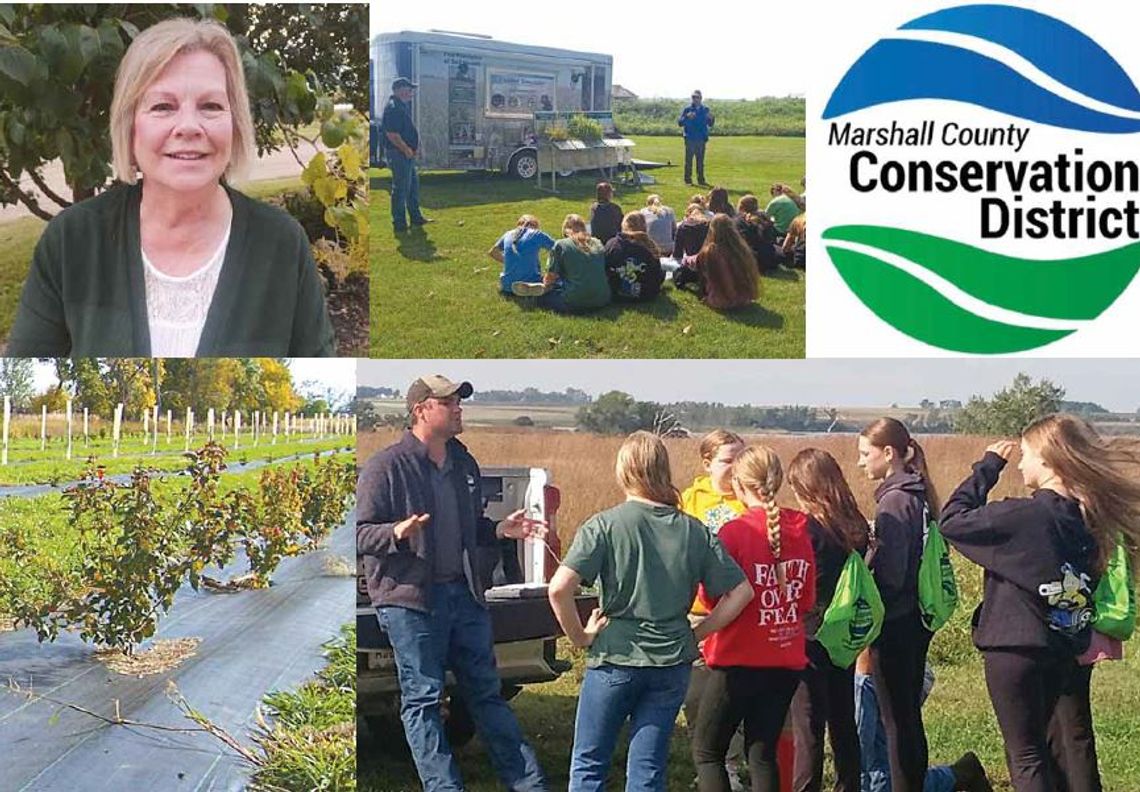
Just off Highway 10 on the east edge of Britton, a modest building comes alive each spring with rows of young trees, bare-root bundles, and potted evergreens waiting for new homes. Known locally as the Tree Shed, the seasonal operation run by the Marshall County Conservation District has become a familiar stop for landowners, homeowners, and anyone looking to plant something that will last longer than the season.
The Tree Shed typically opens the last week of April and runs through Memorial Day, aligning with what conservation staff say is the best window for tree planting in northeast South Dakota. Cool temperatures and spring moisture give seedlings their best chance to establish roots before summer heat arrives.
Inside, customers find fruit trees such as apple, pear, plum, peach, and cherry, along with potted spruce, pine, maples, and native species. Conservation-grade trees used in windbreak and shelterbelt plantings are also available. What started decades ago as a small extension of leftover conservation stock has grown into a community hub that reflects both changing demand and continued conservation needs.
Jean Fagerland, district manager for the Marshall County Conservation District, said the Tree Shed is one of the most visible ways the district connects with the public. “It’s a busy but great place to purchase bare-root trees,” she said. “Fruit trees, pear, peach, plum, cherry, and apple. Potted spruce and pine are available. We also carry native plants. Stop by and see us.”
Fagerland oversees the Tree Shed along with a wide range of conservation responsibilities across Marshall County. Her role includes designing tree planting plans, assisting with grass seedings for federal programs such as CRP and EQIP, and managing a multi-county grant through the South Dakota Department of Agriculture and Natural Resources. Much of her day is spent working with producers to identify cost-share opportunities and conservation practices tailored to their land.
“I work on tree plans, grass seedings, and I help producers find the best cost share available for their operation’s needs,” Fagerland said. “A typical day consists of working with finances and helping landowners implement conservation practices.”
The Marshall County Conservation District itself was organized in 1945 following a 93 percent favorable vote by county residents who were responding to growing concerns about wind and water erosion. Early supervisors identified problems such as flooding, gullying, weeds, and a lack of shelterbelts, and set out to address them with practices like contour strip cropping, pasture management, farm ponds, and tree planting.
THIS IS A SPONSORED STORY. TO READ THE FULL STORY, CHECK THE MAY 13 JOURNAL OR BECOME AN ONLINE SUBSCRIBER BY CALLING 605-448-2281.