
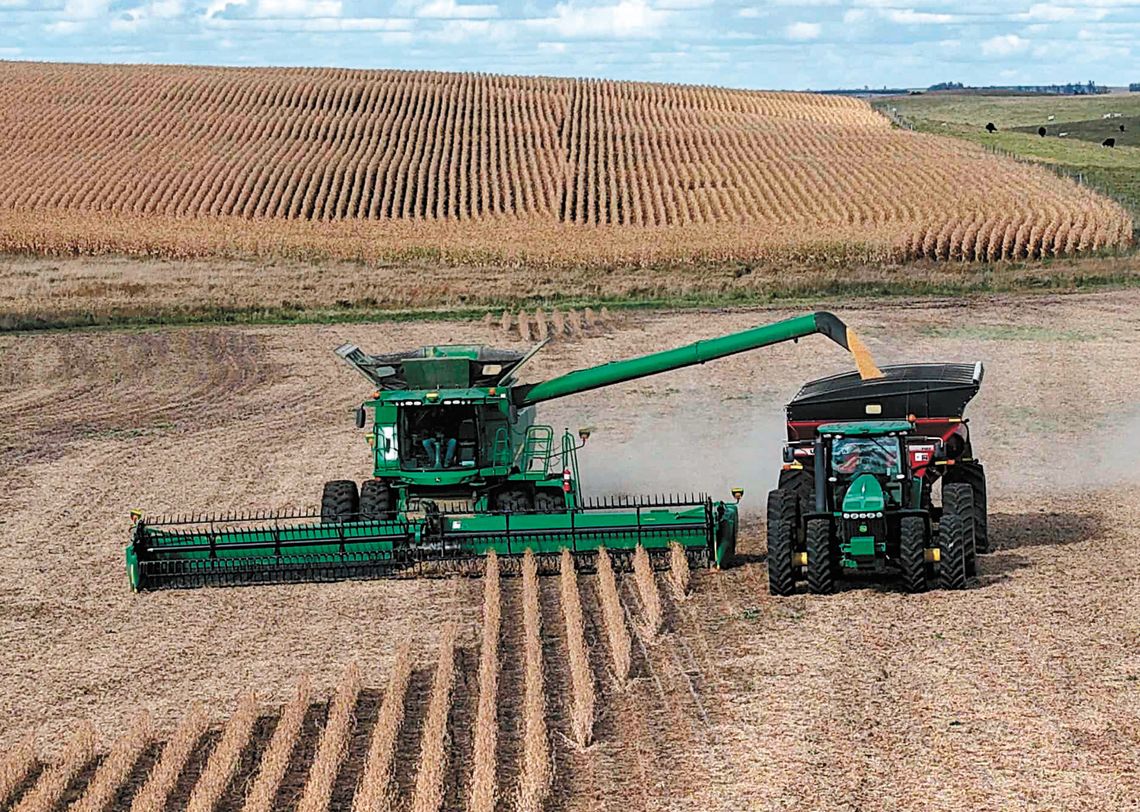
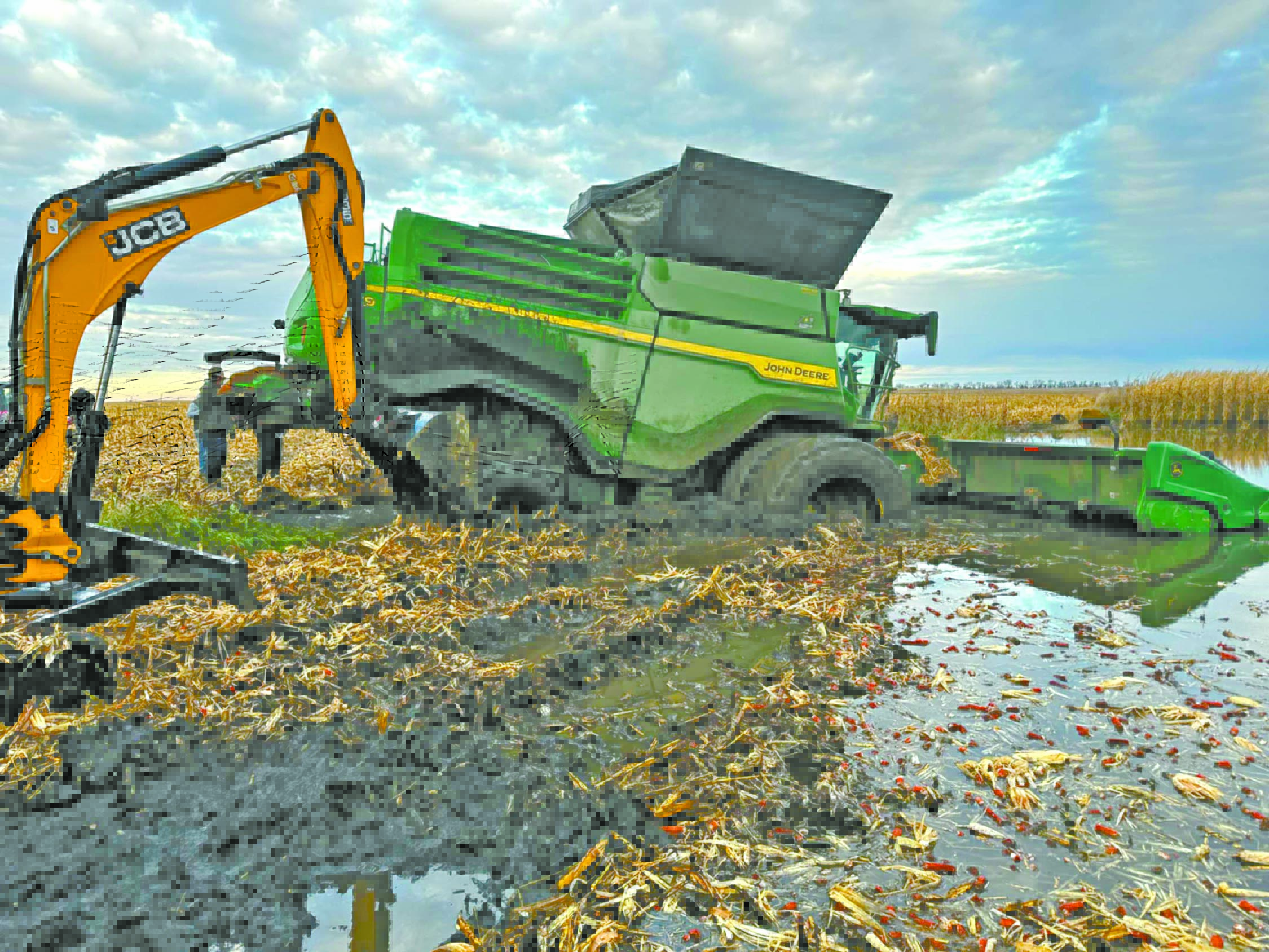
As harvest winds down across the region, most farmers in Journal Country are wrapping up one of the muddiest, most unpredictable seasons in recent memory. After a record-setting late-summer stretch of rainfall, fields were left soggy, potholes were plentiful, and many acres were never touched by a combine. Still, for those who could get into their fields, there were bright spots, especially for corn.
“It was a good crop out there, but too much of a good thing,” said Joe Gustafson of Full Circle Ag in Britton. “We all saw the writing on the wall early on. There was just too much rain, too many drowned-out spots that guys couldn’t get to. There are still a lot of bushels out there that couldn’t be gotten to, and there’s no resurrecting that.”
Despite the challenges, Gustafson said overall corn yields were strong, even if the acres harvested didn’t fully reflect what could have been. “Corn looked good all year, and the yields were there,” he said. “A lot of people put a lot of inputs in and wanted results and they got them, but when parts of your field drown out, it still stings.”
He noted that the large corn piles seen across the area have more to do with the amount of acres planted than record-breaking yields. Soybeans, however, told a different story. “Beans just don’t like wet feet,” Gustafson said. “The excess moisture took the top end of the yield off. There were pockets of very good beans in better-drained ground, but overall they were disappointing.”
Down the road, Chad Voss of Agtegra in Langford described this year’s harvest as “challenging but not without its wins.” The Amherst corridor was one of the wettest stretches in his territory, but he said farmers were mostly able to navigate fields without too much trouble. “It dried out pretty well for harvest, all things considered,” Voss said. “Corn yields were good to great, really the shining star this year. Soybeans were disappointing. They just didn’t like all that late-season moisture.”
Voss also touched on the broader picture facing producers this fall. “Farm incomes are going to be down because of low commodity prices,” he said. “The volatility in the markets has been tremendous. We’re hopeful that the recent developments in soybean meal exports and trade agreements will stabilize things, but it’s been a tough run.”
He said renewed soybean trade with China gave prices a short boost but came too late for many. “The market went up 50 cents after that agreement, but a lot of beans had already been sold,” he said. “We just need to let markets work as markets — engage in normal trade and get back to some sense of normalcy.”
Across the border in North Dakota, Casey Erickson of Full Circle Ag in Forman said harvest progress was steady, though muddy conditions and full grain elevators slowed things down. “We’re in the pothole region, so water usually runs off pretty well, but this year the potholes got bigger,” he said. “Guys were driving through water to combine. Getting stuck was common.”
Erickson estimated over half of his area’s producers were finished by early November but noted that many had to stop and start depending on when elevators could take more grain. “The bushels are there for corn, some big buster yields in spots,” he said. “But soybeans weren’t great. They didn’t get enough stress at the right time, and there were a lot of drown-outs. We’ll need a pretty dry winter to be in a good spot for spring.”
Further west, Brady Wieker of Full Circle Ag in Hecla said nearly everyone is now finished, though the story was much the same with corn strong, beans weak. “We definitely had people getting stuck,” he said. “The Britton-Claremont area had a lot of drown-outs. Corn really cheered guys up this fall after the beans dragged things down. Corn yields were as good or better than recent years.”
The soggy conditions even created some unexpected business opportunities. Andy Weber of Britton spent a good deal of time pulling out stuck equipment. “I’ve probably pulled a dozen pieces of machinery out of fields in the last few weeks,” he said. John Fisher, who got stuck in one of his wettest fields near the Britton Cemetery, said it summed up the season well. “Corn we had was very good,” he said. “Field averages will suffer, though, because of all the ponding.”
Looking ahead, local experts agree that a relatively open winter would benefit farmers. “Going into 2026, we’re not in a position to hold much more moisture,” Gustafson said. “An open winter would be great for producers.”
While local conditions dominate the conversation, the national harvest is also wrapping up — though official data is hard to come by. With no USDA Crop Progress report released for the sixth straight week because of the government shutdown, analysts estimate the U.S. corn harvest at 92% complete and soybeans at 96% as of Sunday, nearly matching last year’s pace.
For local farmers, those numbers might offer little comfort after a season of uncertainty. As Voss summed it up: “It was a challenging year. We’re just ready to get this one behind us and hope for a little normal next year.”