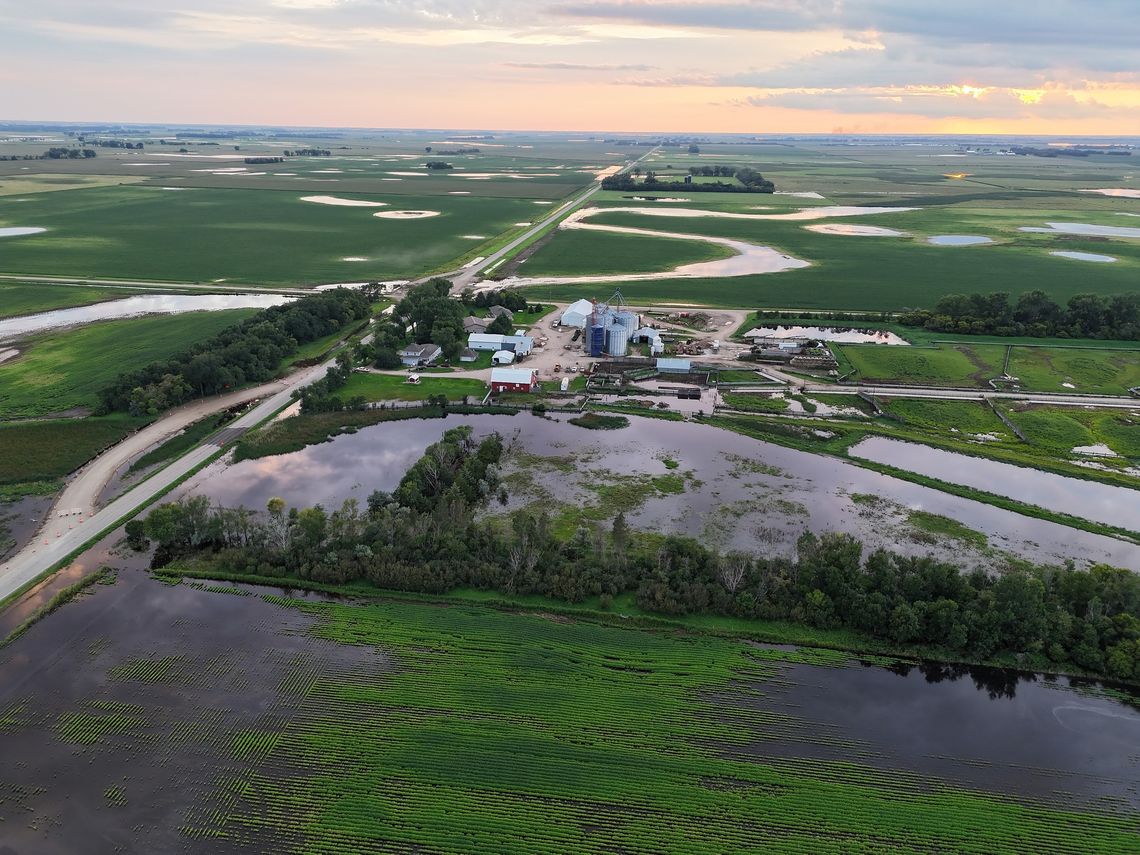
The U.S. Department of Agriculture (USDA) Farm Service Agency (FSA) announced that Marshall County is accepting applications for the Emergency Conservation Program (ECP) to address damages from flooding that occurred June 12, 2025, through June 13, 2025. ECP provides cost-share and technical assistance to producers to restore farmland to pre-disaster conditions. ECP signup started Aug. 1, 2025, and ends Sept. 15, 2025.
Approved ECP practices include removing debris, such as cornstalks from farmland; grading, shaping or leveling land; restoring permanent fences; and restoring conservation structures including grass waterway, diversions and structures for water control.
Approved ECP applicants can receive up to 75% of the cost of the approved restoration activity with a maximum cost share of $500,000 per natural disaster event.
ECP cost share is authorized to:
-provide reimbursement of costs up to 75% of the total cost of rehabilitating the land, including availability of advance payments for up to 25% of the total allowable cost for all ECP practices before the restoration is carried out. The cost-share payment must be spent within 60 days; and
-allow producers who lease federally owned or managed lands, including tribal trust land, as well as state land, the opportunity to participate in ECP.
Conservation concerns present on the land prior to the qualifying natural disaster event are not eligible for ECP assistance.
For more information on ECP, producers can contact the Marshall County FSA Office at (605) 448-5921 ext. 2 or visit farmers.gov/protection-recovery.