
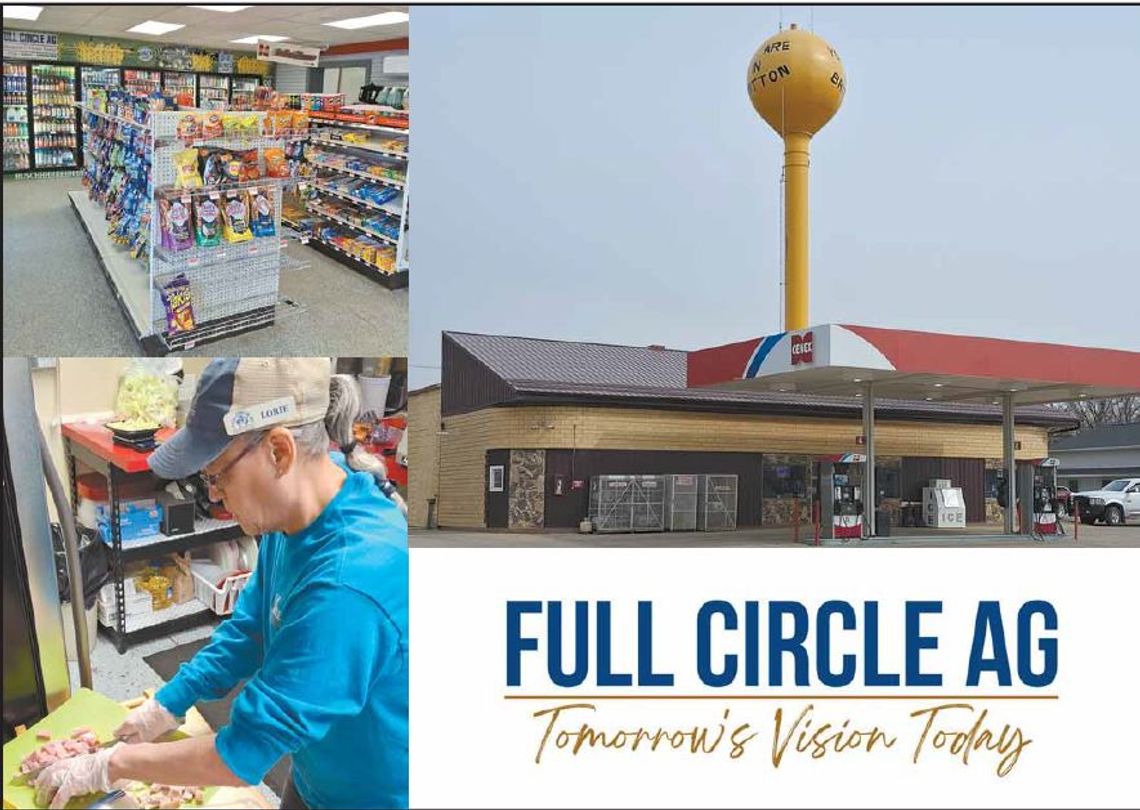
Agricultural cooperatives are built on the idea of farmers pooling resources to secure better prices, access larger markets, and reduce costs. Full Circle Ag, headquartered in Britton, follows this cooperative model while also serving the broader community. One way it does this is through its convenience store, a go-to stop for both locals and travelers. Offering fuel, essentials, and friendly service, the Full Circle Ag C-store located right on Highway 10 in Britton continues to expand its offerings, making it an even more valuable part of the town.
First, a little history behind the co-op and the c-store. Full Circle Ag’s roots trace back to 1936 when the Farmers Union Co-op Association of Marshall County was founded to support local farmers. Over the decades, the co-op grew through key mergers and acquisitions, expanding its services and reach. In 1990, Brown County Cooperative joined Farmers Union, followed by the Amherst-Claremont Elevators in 1991. By 2000, Farmers Union evolved into 4 Seasons Cooperative, further strengthening its presence. The early 2000s saw continued growth, including the formation of Petroleum Partners in 2001 and multiple cooperative mergers. A major step came in 2011 when Gwinner Farmers Elevator merged, and Full Circle Ag fully acquired Petroleum Partners, solidifying its role in agronomy and fuel services. Today, Full Circle Ag remains a trusted partner for area farmers.
On the convenience store side, the Britton History book published in 1984 offers a glimpse into its origin.
THIS IS A SPONSORED STORY. READ THE FULL STORY IN THE JOURNAL OR CALL US AT 605-448-2281 TO START YOUR ONLINE/E-EDITION SUBSCRIPTION