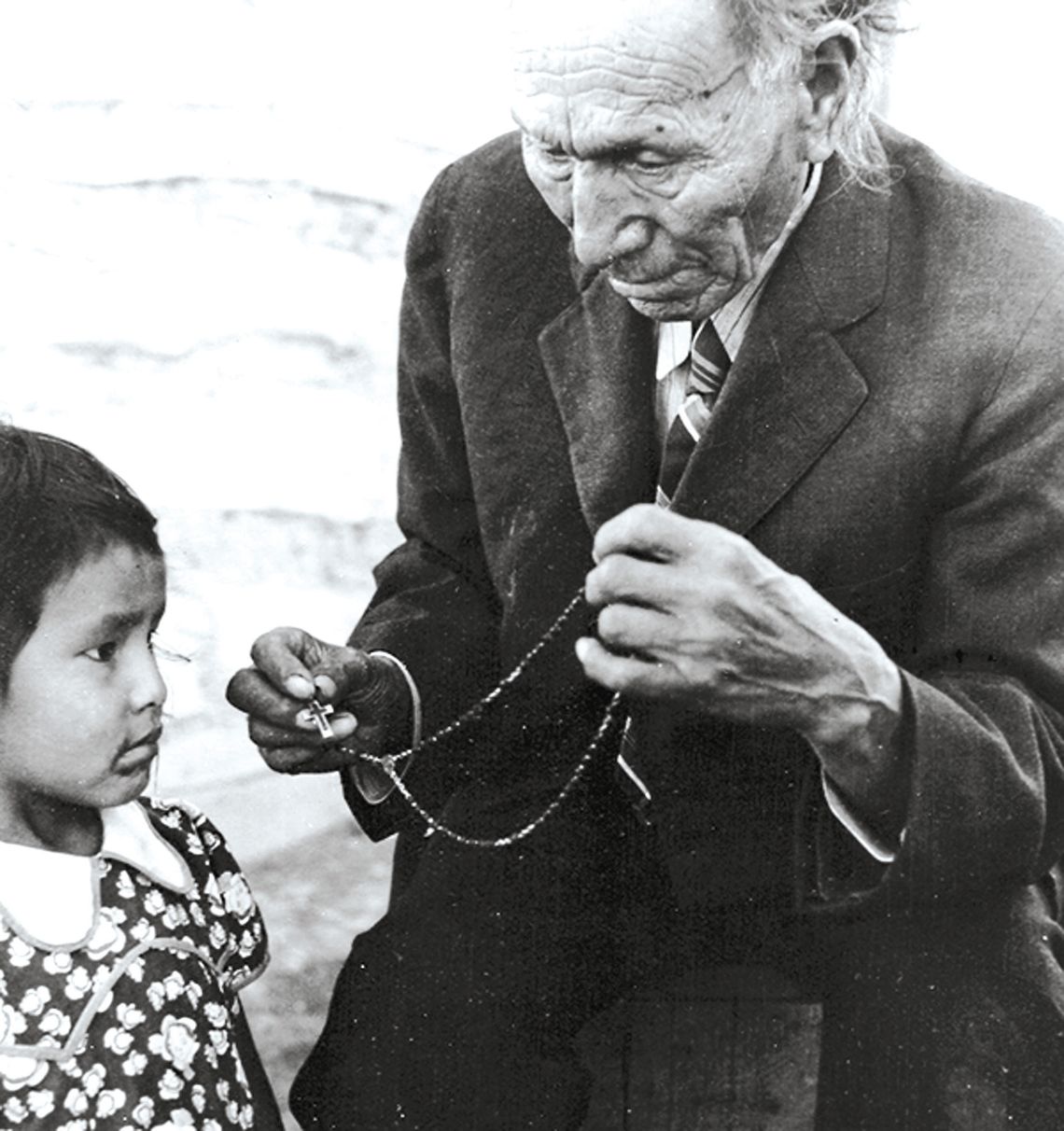
Due to numerous books written about him, Nicholas Black Elk is known world-wide. However, news that he could become South Dakota’s first saint, and the second Native American saint in North America--joining 17th -century Mohawk woman Saint Kateri Tekakwitha in that title--is far less known.
The Diocese of Rapid City officially opened Black Elk’s cause for canonization in 2017. It is a lengthy process involving examination of extensive research, testimony, and documents regarding Black Elk’s life and holiness. After careful study, he was declared a ‘Servant of God’ and his cause for canonization was then sent to Rome in 2019. After study of the documents there, it is hoped that Nicholas Black Elk will receive the title of ‘Venerable’. A miracle through his intercession is then needed for his beatification; a second miracle will result in canonization as a saint.
Black Elk was an Oglala Lakota visionary, medicine man, and healer who embraced Christianity. He was known to be fully Lakota and fully Catholic, praying with his pipe and his rosary.
As a Catholic catechist, Black Elk traveled extensively to preach, tell stories, and write pastoral letters. Credit is given to him for the baptisms of over 400 people. His teachings spread far beyond his own people making him an inspiration of courage and wisdom for all people.
The documentary, ‘Walking the Good Red Road; Nicholas Black Elk’s Journey to Sainthood’, was made in South Dakota and produced on the beautiful Pine Ridge Reservation. It will be shown at the Strand Theater in Britton at 7 pm on Wednesday, March 12. There is no cost for admission; concessions will be available to purchase.