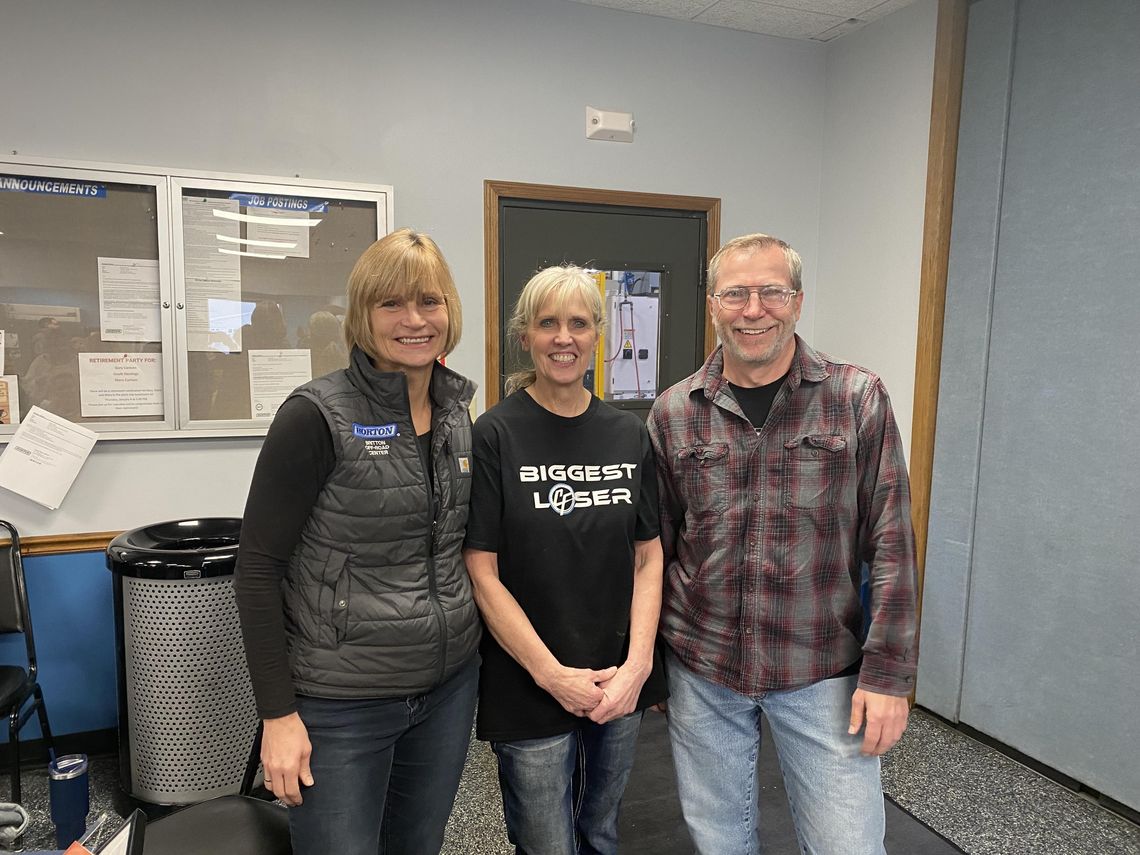
In the last few weeks, three long-time employees at Horton, Inc. clocked in for the last time. Mary Carlson, Gary Carlson and Gayle Hastings all retired on Jan. 5 after working for over three decades at the Britton manufacturer.
Mary Carlson started at Horton on Sept. 13, 1991, as a receiver. During her 32-year tenure with Horton, she spent time as a machinist, an assembler, customer service/planner, production group lead, and an area manager. Upon her retirement, Mary plans on spending more time with her children and grandchildren, doing some traveling, participating in and hosting puzzle competitions, and go sightseeing and hiking.
Gary Carlson also retired on Jan. 5 after 32 years with Horton. Gary started with the company on Sept. 9th, 1991, as a janitor for second shift. During Gary’s time with Horton, he spent time as a journal bracket machinist, a lead, and many years as an assembler. Gary plans to spend more time with his son, play more pickleball, go hunting (especially for ducks), fishing, going to the lake, sightseeing, and hiking.
Gayle Hastings hung her hat up after 31 years with Horton. Gayle started at the company on Sept. 7, 1992, as a lunchroom attendant/cleaner. Over the years, she spent time as a parts washer, an assembler, and a machinist. She also worked in the reman, teardown, and quality departments. Gayle plans on spending time with her children, grandchildren, siblings, and friends. She will be working on house projects, doing some landscaping, gardening, and try her hand at playing golf